Lustucru Pasta
In 1871, Louis Cartier-Millon purchased a workshop in Grenoble that had been producing pasta since 1824. By 1900, local demand necessitated the construction of a new factory. At the time, pasta was sold in bulk and unbranded. To grow the business, the Cartier-Millon family decided to focus on branding and packaging. In 1910, another new factory had to be built.
In 1911, following a poster competition won by illustrator Synave, the light and dark blue checkerboard pattern was born. At the closing banquet of this competition, Jean-Louis Forain sang the nursery rhyme "C'est la mère Michel"... with Père Lustucru. This marked the birth of the brand.
Cappiello drew inspiration from this legendary character for his poster. In the 17th century, Lustucru was a blacksmith who straightened women's minds. Later, he became a grotesque and ridiculous giant parading in carnivals. Then, featured in children's lullabies, he ended up being mocked.
This friendly giant gains his strength by eating pasta.
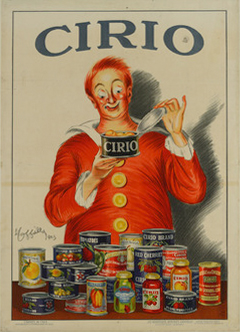
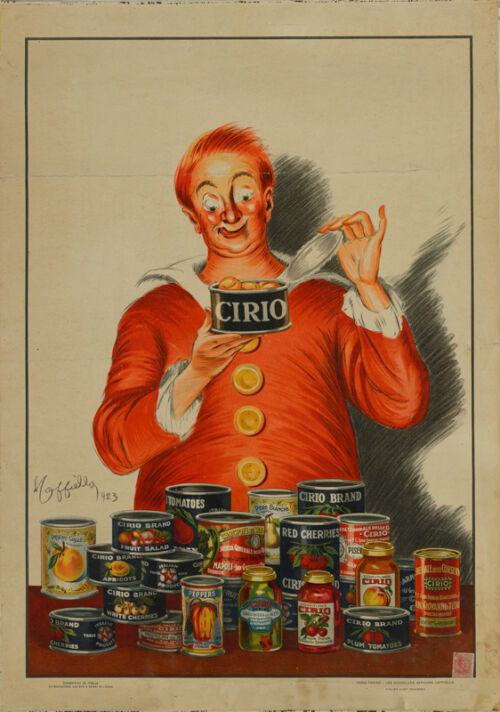 Around 1860, Francesco Cirio built the first canned pea factory. Following rapid expansion, he established several fruit canning factories in southern Italy and brought abandoned lands back into cultivation to supply his factories. By 1900, at the time of his death, his company had become one of the largest in Europe.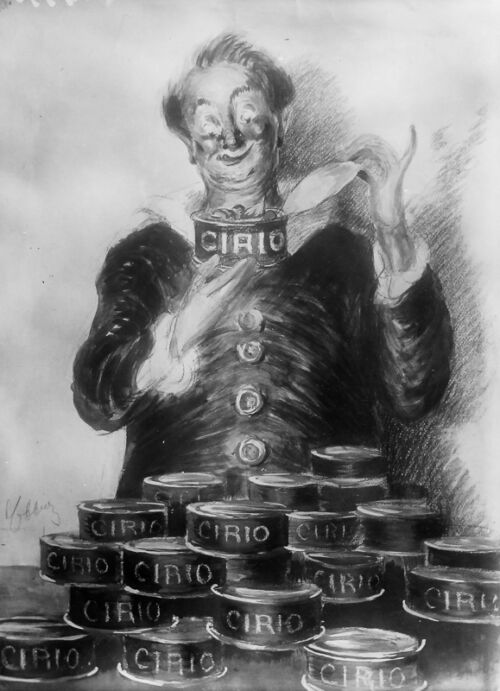
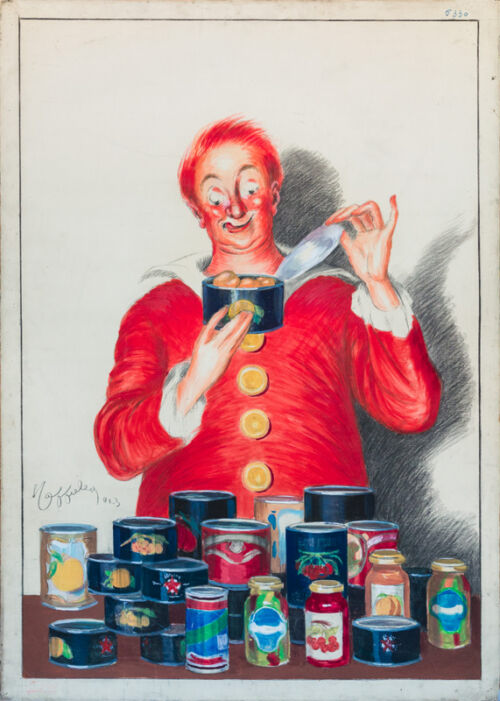 Canned goods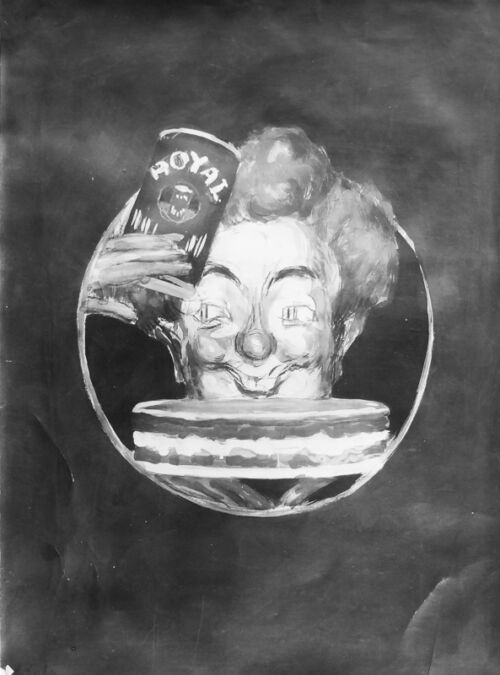
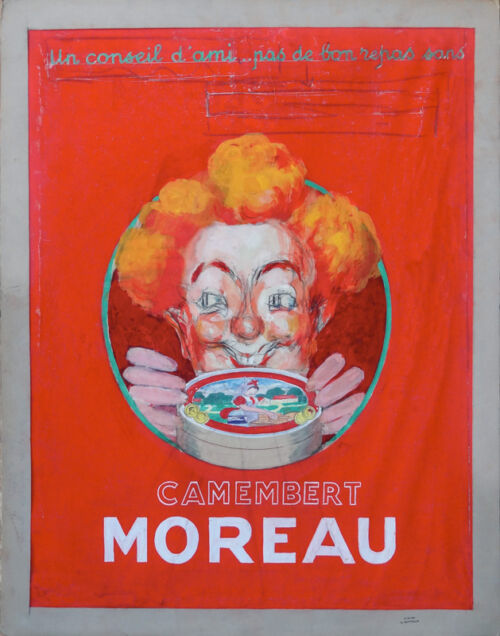 Camembert, soft cheese.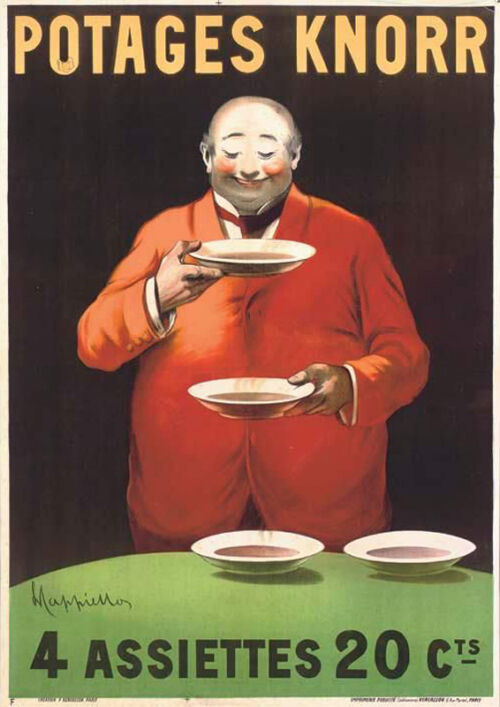
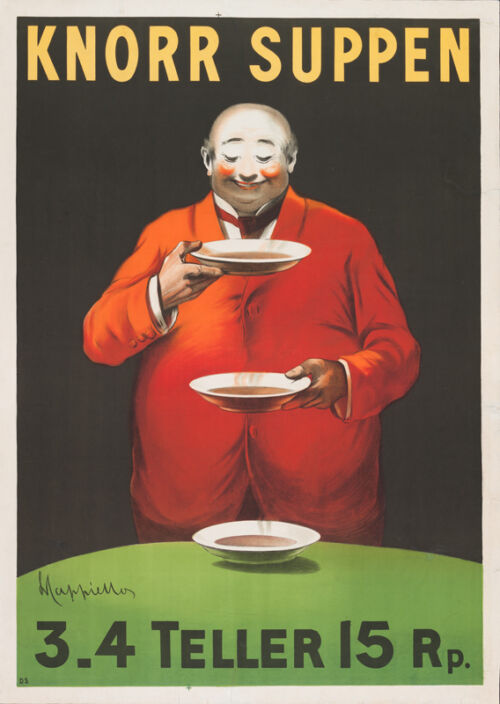 Dehydrated soup
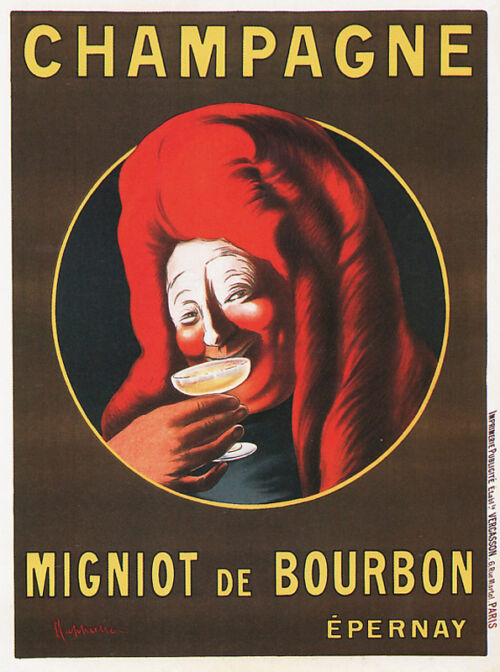 Champagne house in Epernay
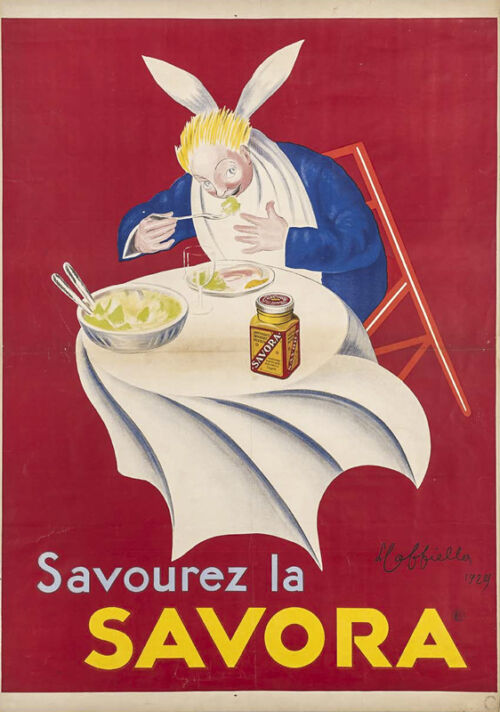 Condiment
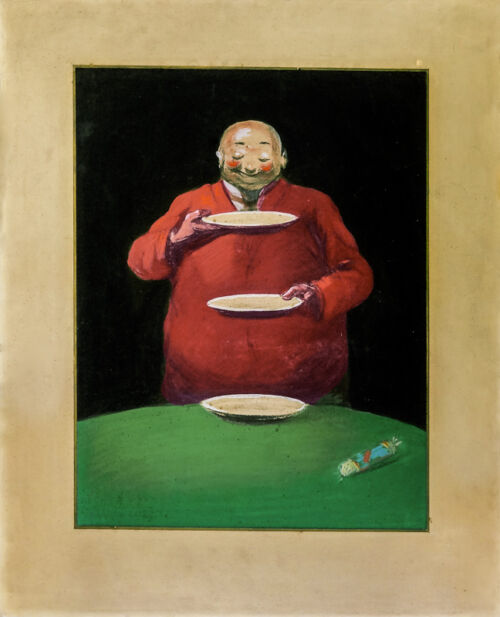 Dehydrated soup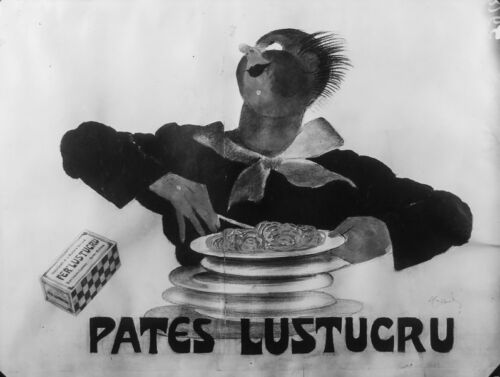
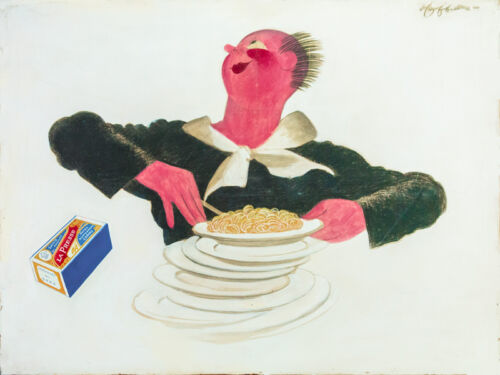 Pasta produced by the Société Anonyme des Pâtes Alimentaires Codou in Marseille.
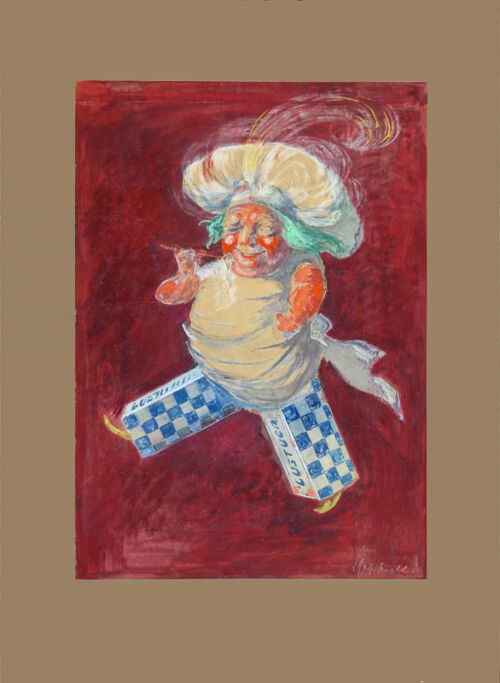 Lustucru Pasta
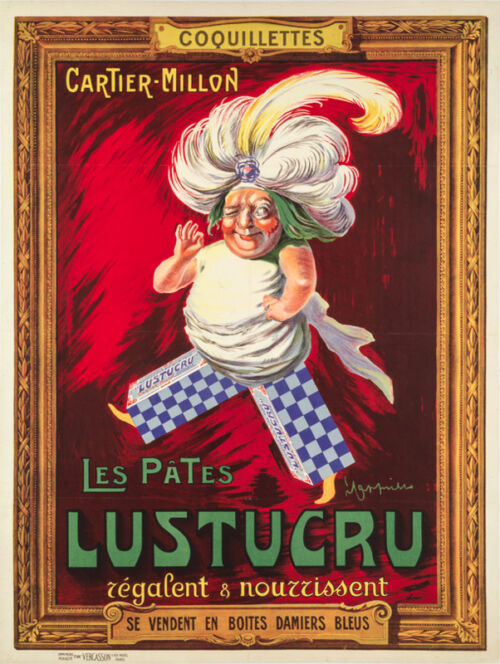 Lustucru Pasta In 1871, Louis Cartier-Millon purchased a workshop in Grenoble that had been producing pasta since 1824. By 1900, local demand necessitated the construction of a new factory. At the time, pasta was sold in bulk and unbranded. To grow the business, the Cartier-Millon family decided to focus on branding and packaging. In 1910, another new factory had to be built. In 1911, following a poster competition won by illustrator Synave, the light and dark blue checkerboard pattern was born. At the closing banquet of this competition, Jean-Louis Forain sang the nursery rhyme "C'est la mère Michel"... with Père Lustucru. This marked the birth of the brand. Cappiello drew inspiration from this legendary character for his poster. In the 17th century, Lustucru was a blacksmith who straightened women's minds. Later, he became a grotesque and ridiculous giant parading in carnivals. Then, featured in children's lullabies, he ended up being mocked. This friendly giant gains his strength by eating pasta.
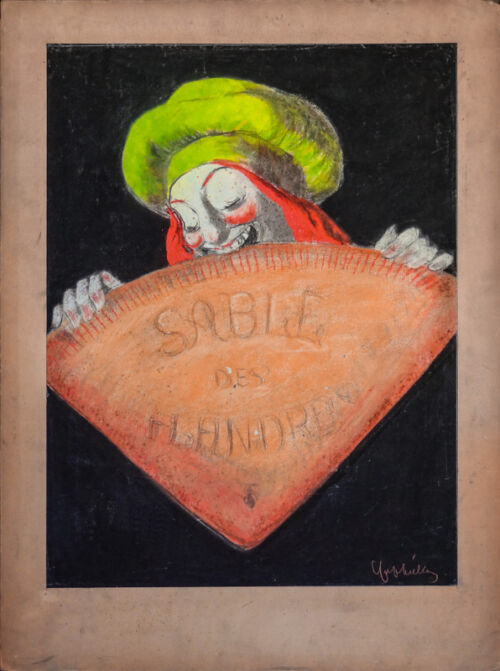 Cookies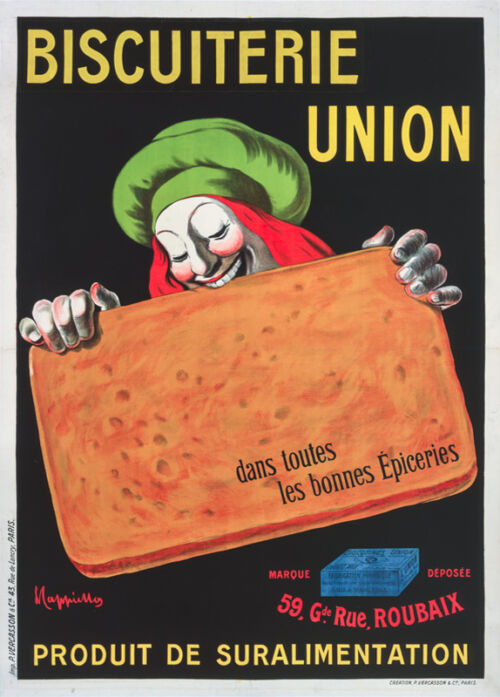
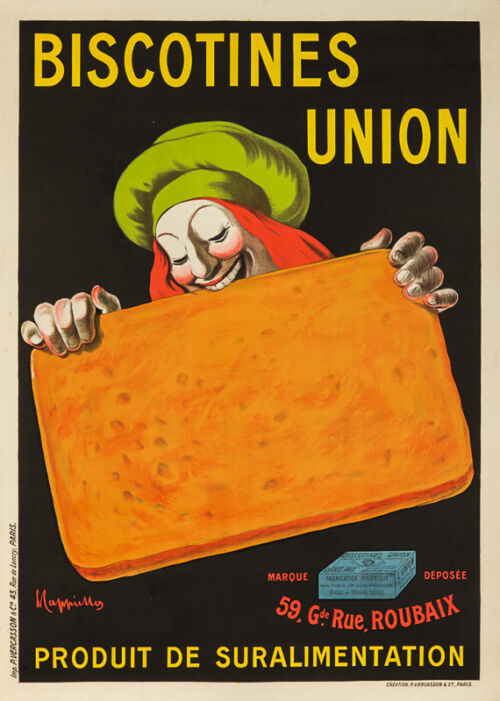 Overfeeding biscuits. In 1892, an affordable bakery called UNION opened in Roubaix. Its purpose was to distribute bread at cost price to help the working class. Its growth was substantial. By 1920, it produced only biscuits and overfeeding biscuits. The company is still in operation today. It is called Union Biscuits. A variant of this poster is intended for the biscuit factory (1906200Z1).