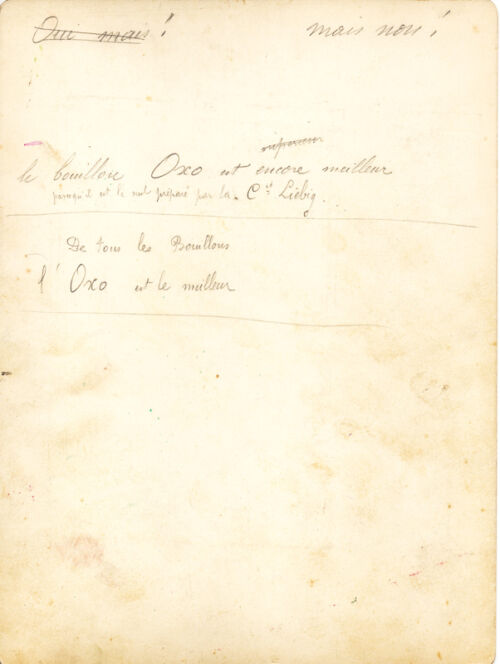
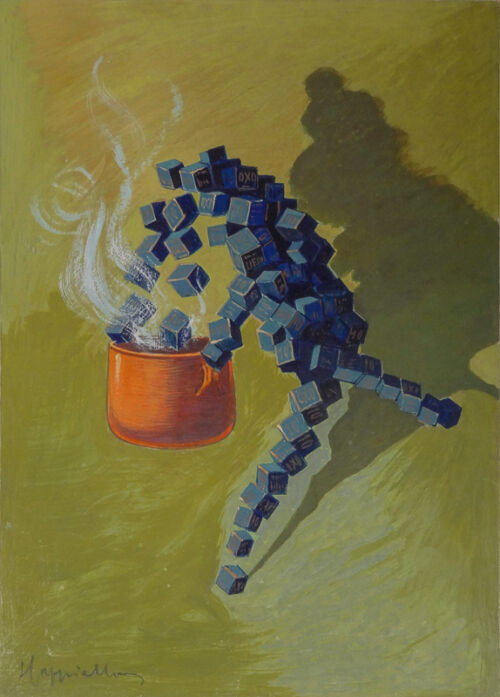
 Meat extract broth
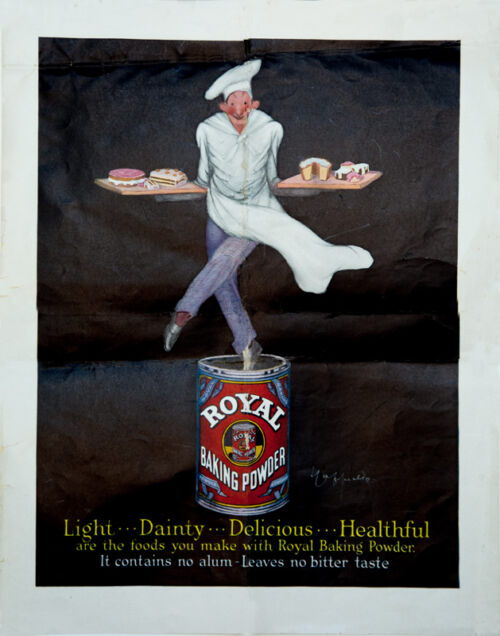 Yeast for preparing cakes.
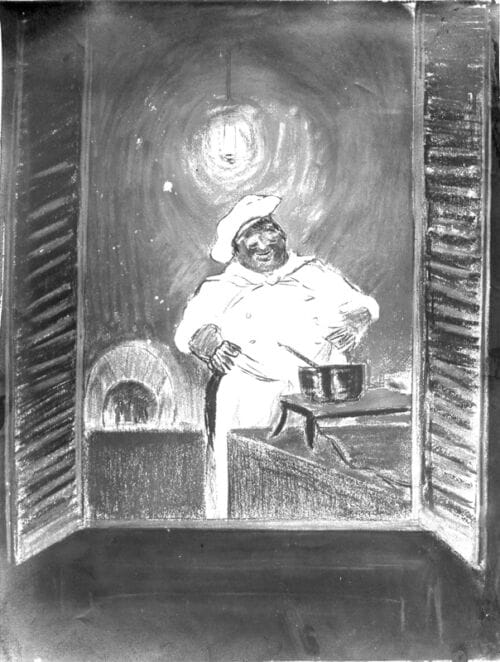 Culinary preparation
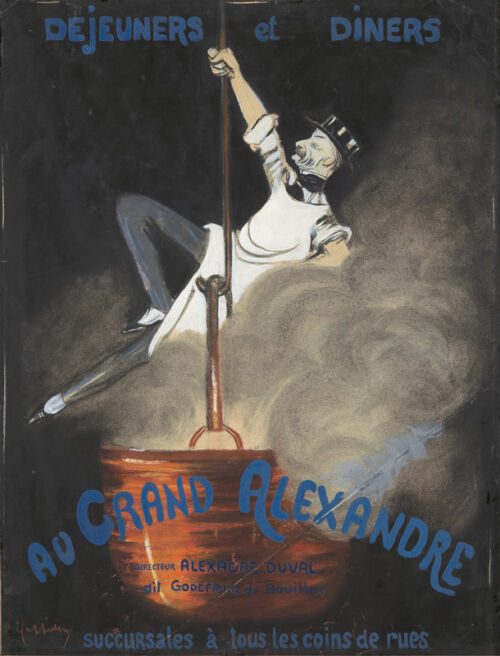 Paul-Louis Duval (1811 - 1870) opened a brewery around 1860 next to his butcher shop located in the Parisian market halls. His concept was to generously serve the market porters a beef broth at a modest price. His son Alexandre (1847 - 1922) expanded the concept after his father's death and created a full-fledged restaurant chain. He notably opened the famous Bouillon Duval. Then he ventured into high society. He was a witty man, exuding refined elegance, wearing violet suits with muslin cuffs, lace jabots, and half-top hats. Parisians would nickname him Godefroy de Bouillon.
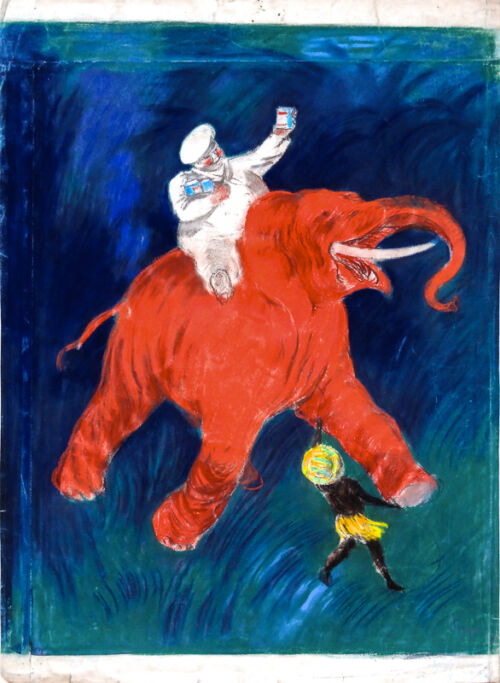 Cooking fat, made from coconut oil and palm oil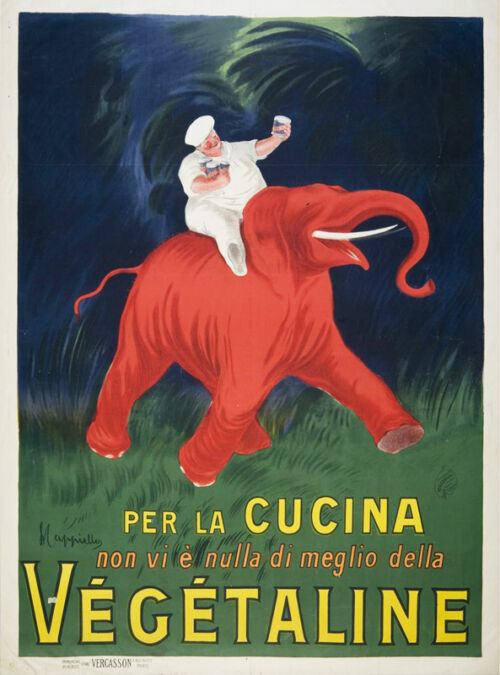
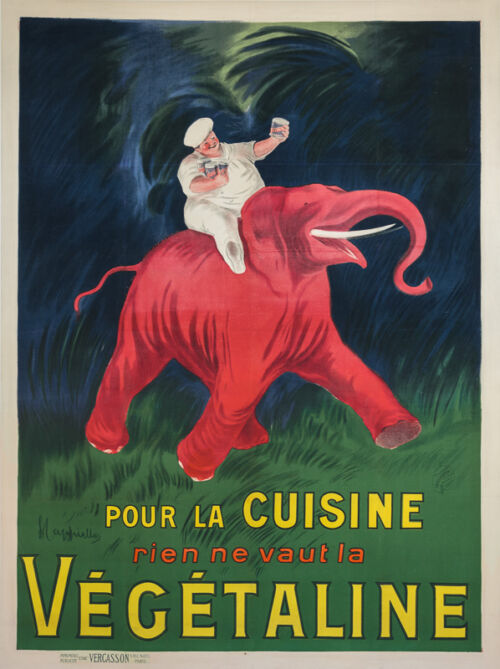 Cooking fat, made from coconut oil and palm oil.
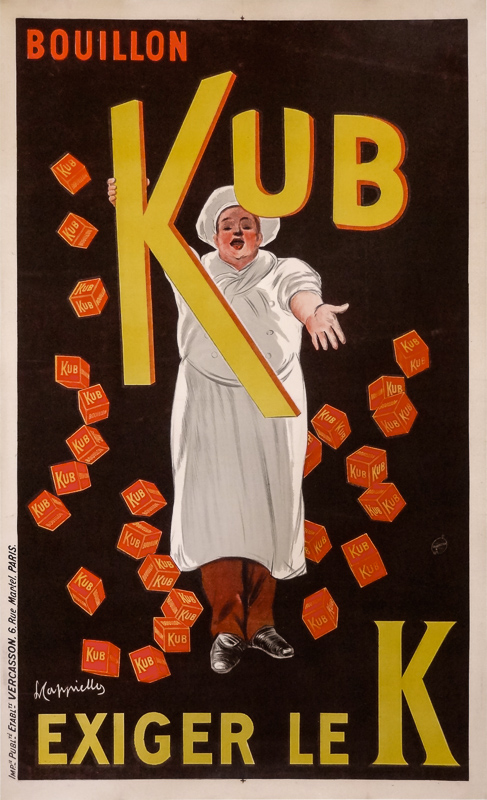 Bouillon Kub: Dehydrated meat juice
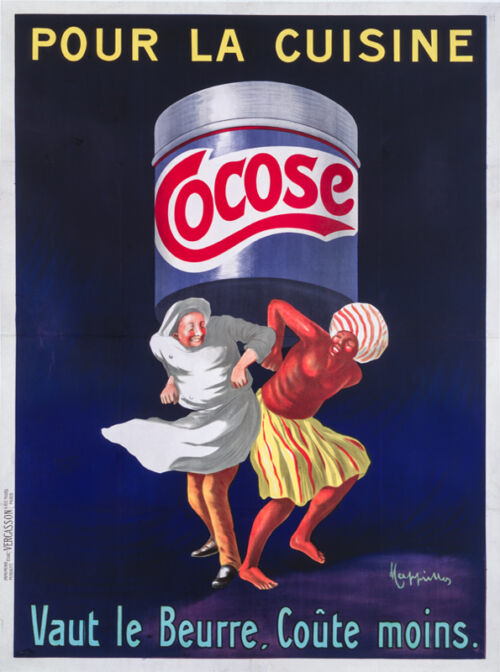 Vegetable fat from the coconut kernel.
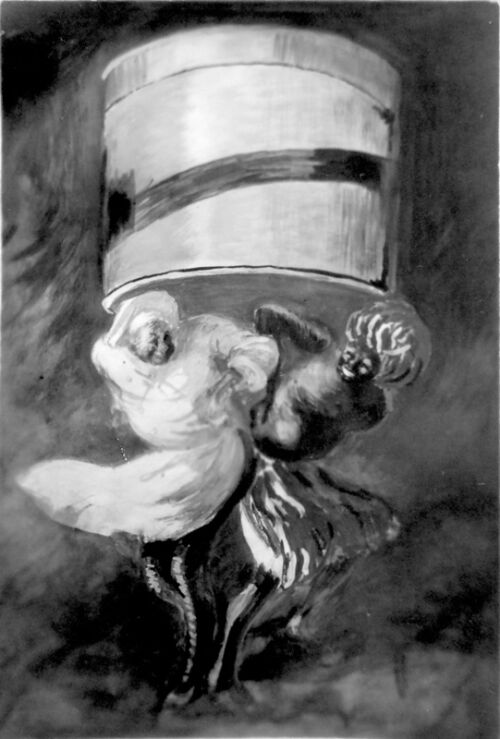 Vegetable fat extracted from the kernel of the coconut.
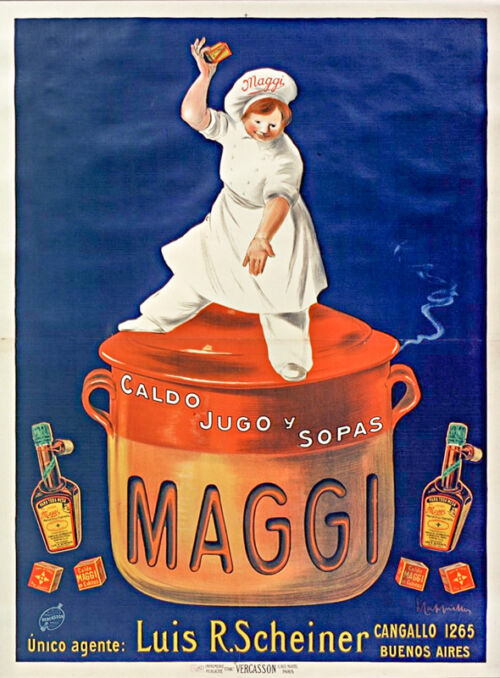 Concentrated or dehydrated meat broths marketed by the Luis R. Scheiner establishments in Buenos-Aires.
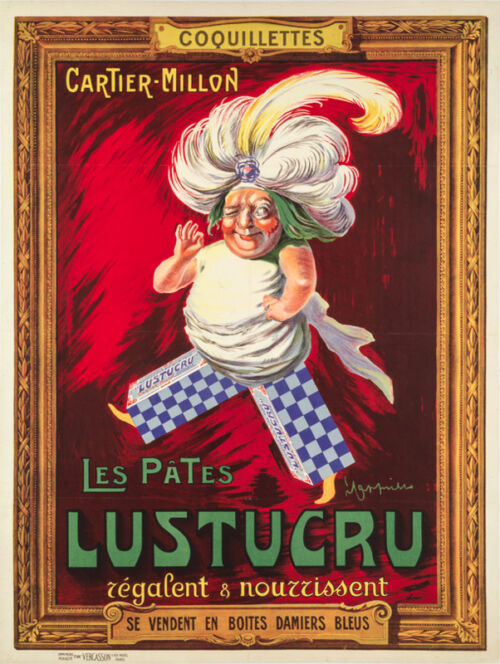 Lustucru Pasta In 1871, Louis Cartier-Millon purchased a workshop in Grenoble that had been producing pasta since 1824. By 1900, local demand necessitated the construction of a new factory. At the time, pasta was sold in bulk and unbranded. To grow the business, the Cartier-Millon family decided to focus on branding and packaging. In 1910, another new factory had to be built. In 1911, following a poster competition won by illustrator Synave, the light and dark blue checkerboard pattern was born. At the closing banquet of this competition, Jean-Louis Forain sang the nursery rhyme "C'est la mère Michel"... with Père Lustucru. This marked the birth of the brand. Cappiello drew inspiration from this legendary character for his poster. In the 17th century, Lustucru was a blacksmith who straightened women's minds. Later, he became a grotesque and ridiculous giant parading in carnivals. Then, featured in children's lullabies, he ended up being mocked. This friendly giant gains his strength by eating pasta.
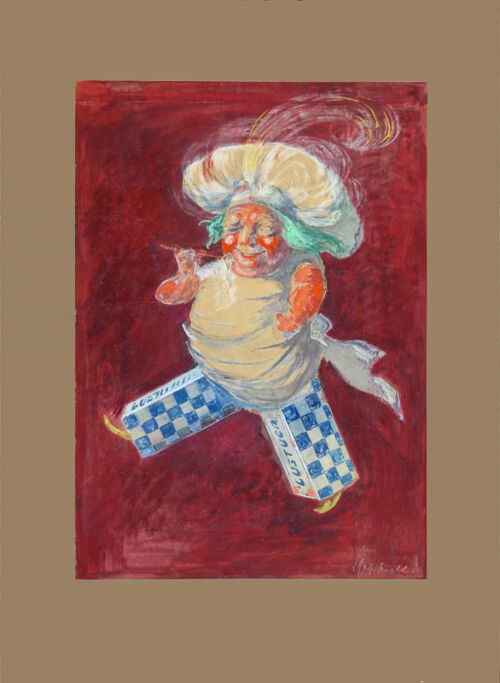 Lustucru Pasta
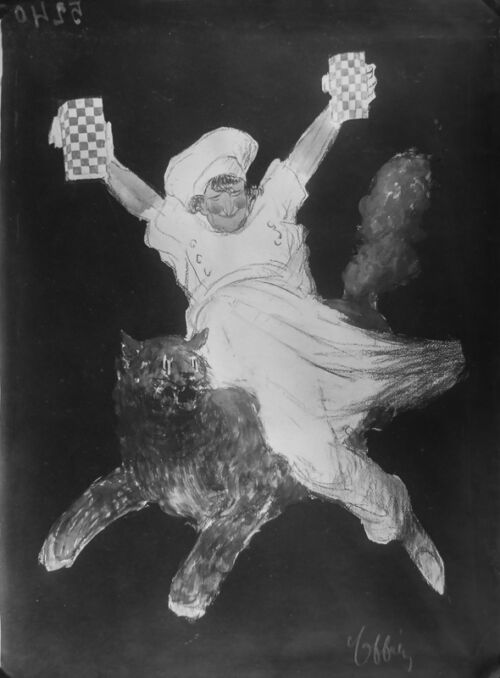 Pâtes Lustucru In 1871, Louis Cartier-Millon purchased a workshop in Grenoble that had been producing pasta since 1824. By 1900, local demand required the creation of a new factory. At that time, pasta was sold in bulk and unbranded. To grow the business, the Cartier-Millon family decided to focus on branding and packaging. In 1910, they had to build a new factory. In 1911, following a poster competition won by the illustrator Synave, the light and dark blue checkerboard pattern was born. At the closing banquet of this competition, Jean-Louis Forain sang the nursery rhyme "C'est la mère Michel"... with Père Lustucru. This marked the birth of the brand.
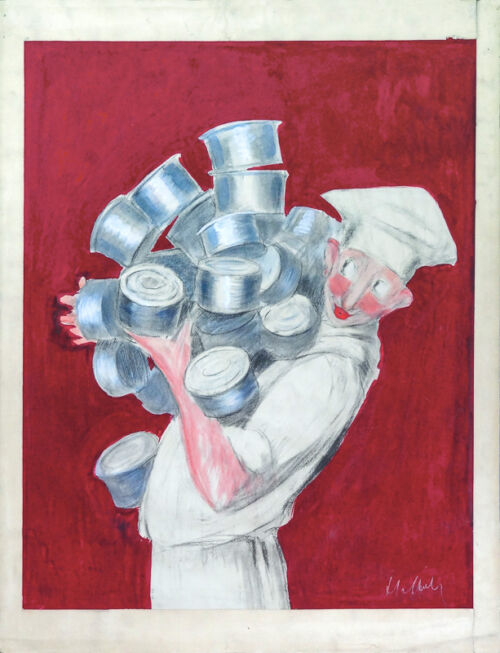 Canned goods
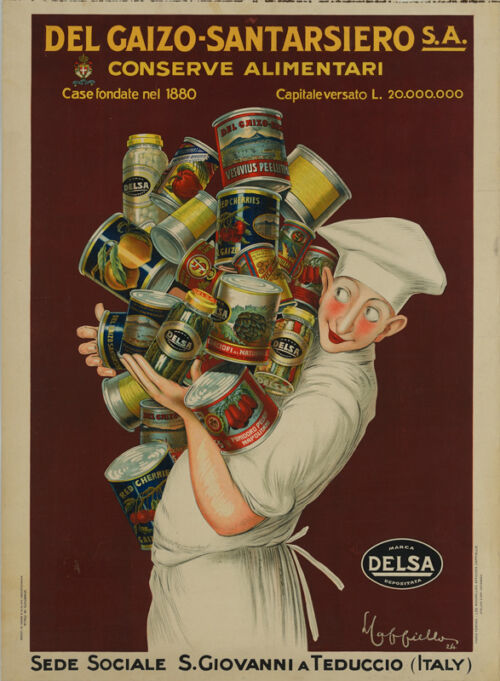 Canned food, mainly tomatoes produced in the Naples region. This company grew mainly thanks to Italian immigration to the United States, to which it exported a large part of its production.
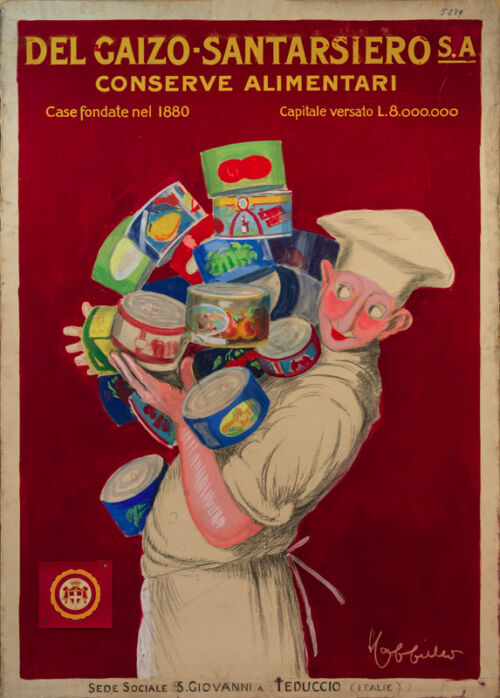 Canned food from the Del Gaizo-Santarsiero brand located in the Naples region of Italy.
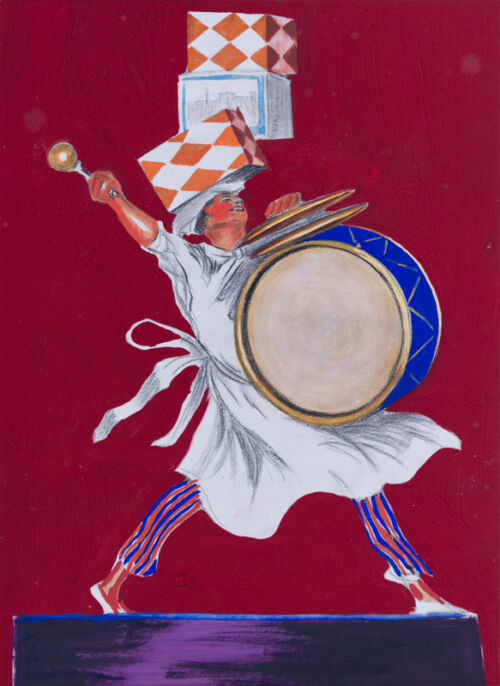 Corbeil Pasta. In 1922 the Grands Moulins de Corbeil in Essonne began production of this pasta.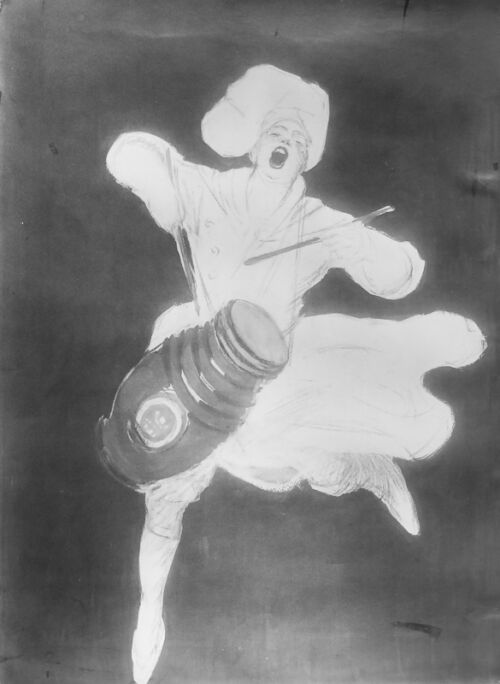
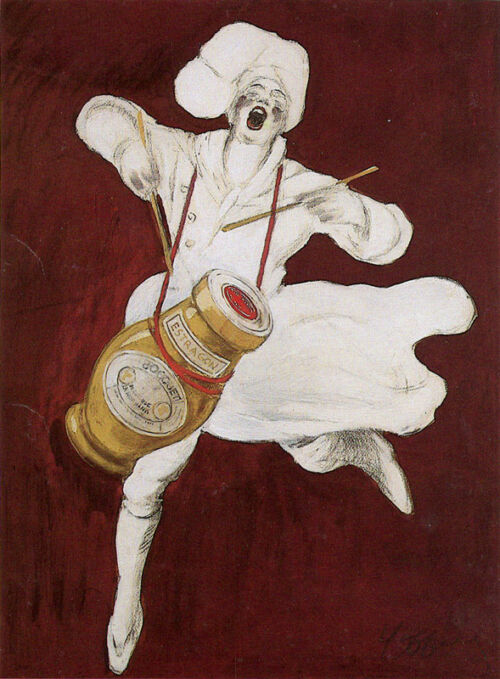 Mustard made in Yvetot in Normandy. The first sketch was made for Louit mustards in Bordeaux (See black and white photo).
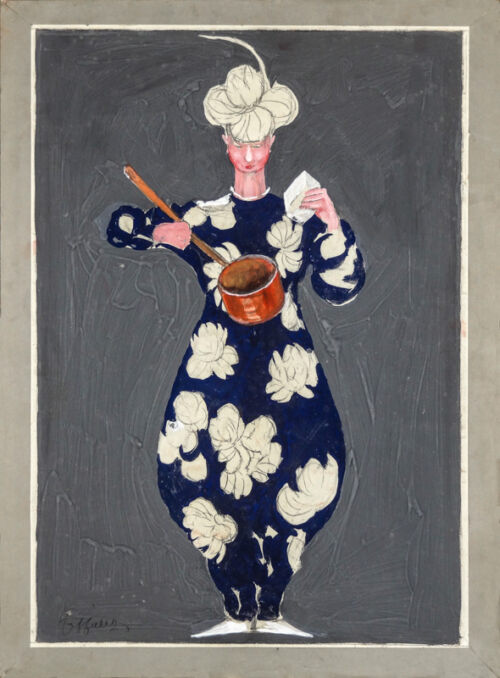
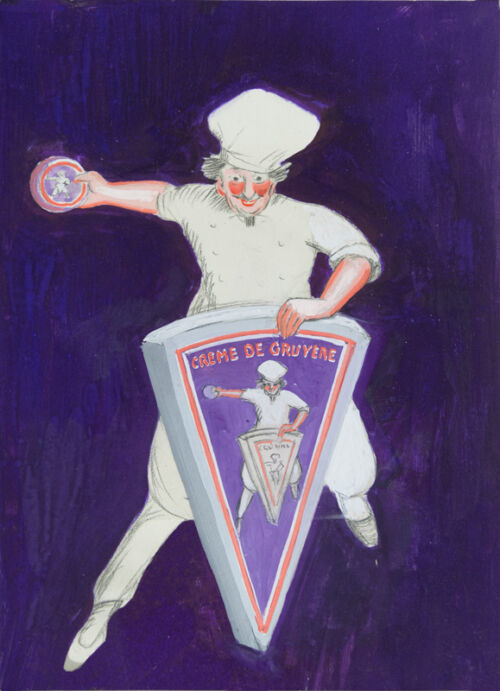 Cappiello took over the cook from the green Cross oil and replaced the oil bottles with Gruyère cream.
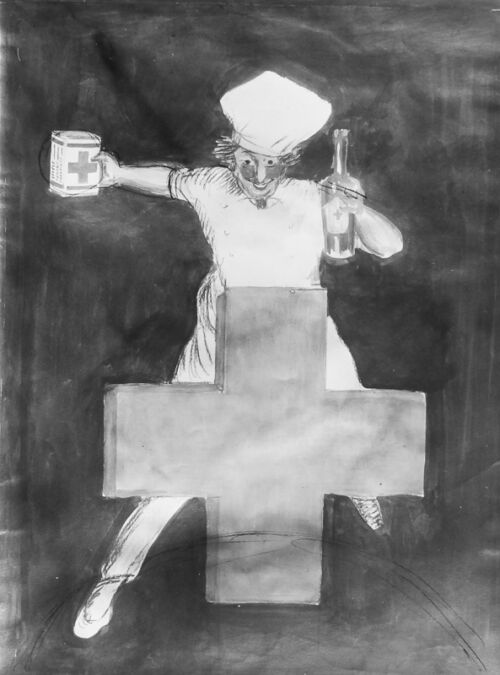 Project for the Green Cross oil in Bordeaux.
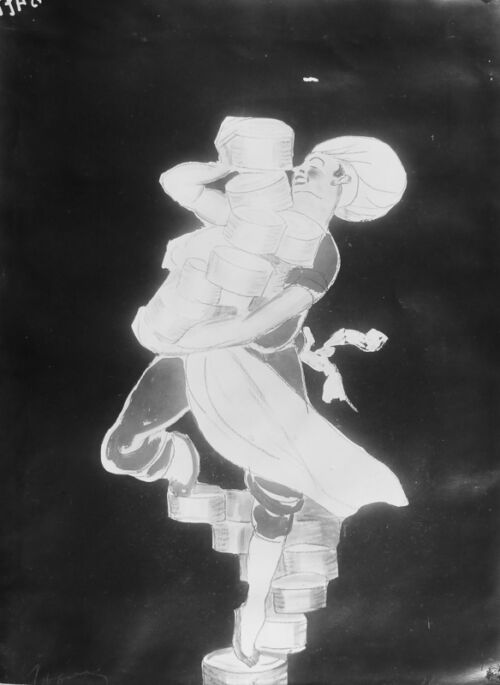 Cans
Cans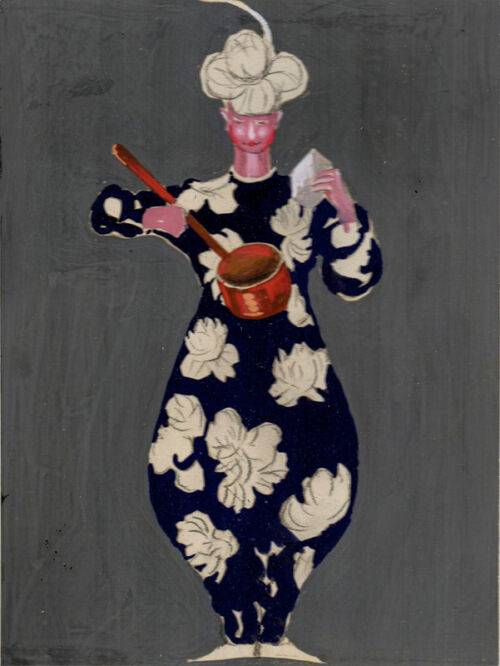 Margarine
 Margarine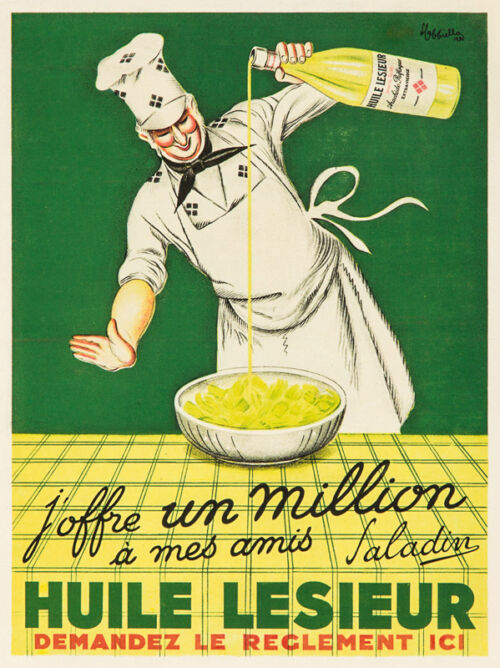
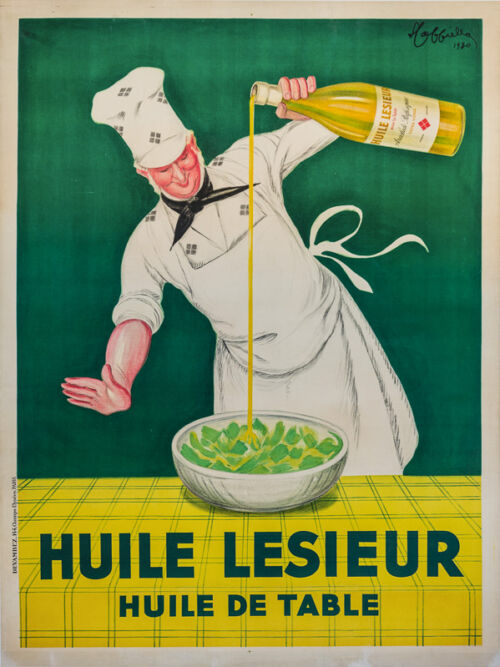 Table oil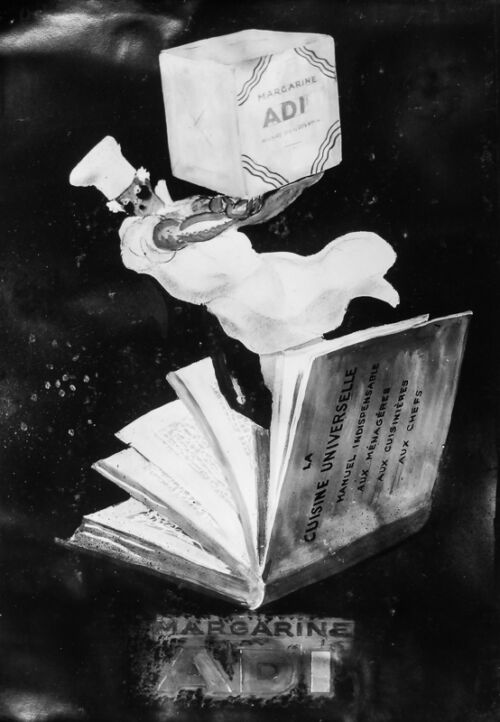
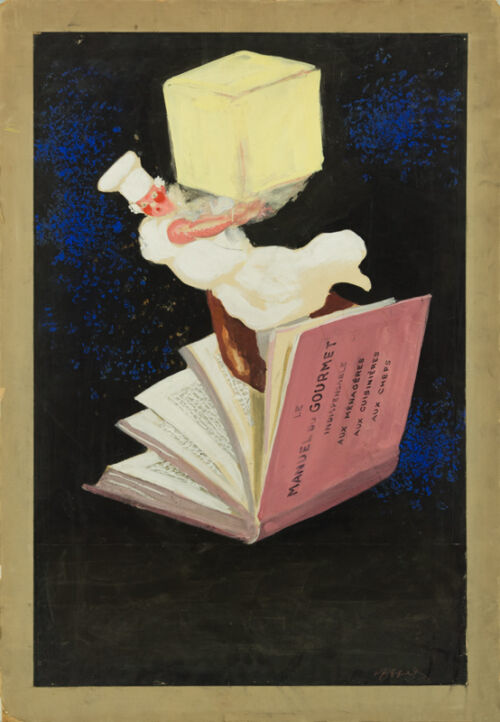 Margarine
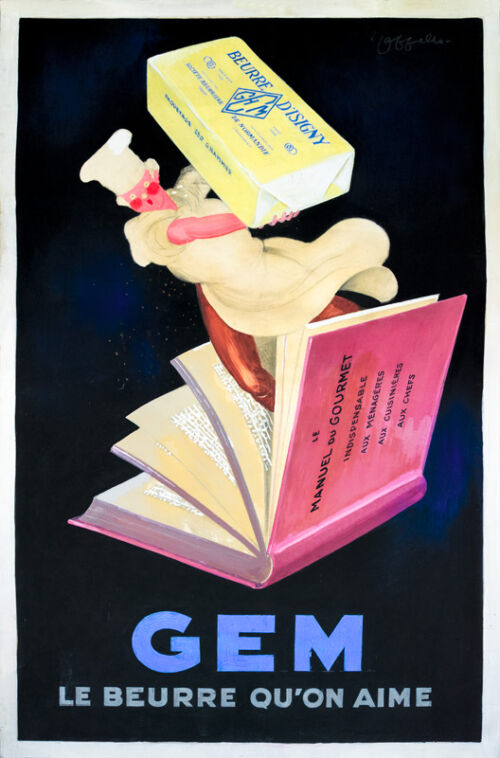 Isigny butter in Normandy A variant of this model was made for the AXA margarine
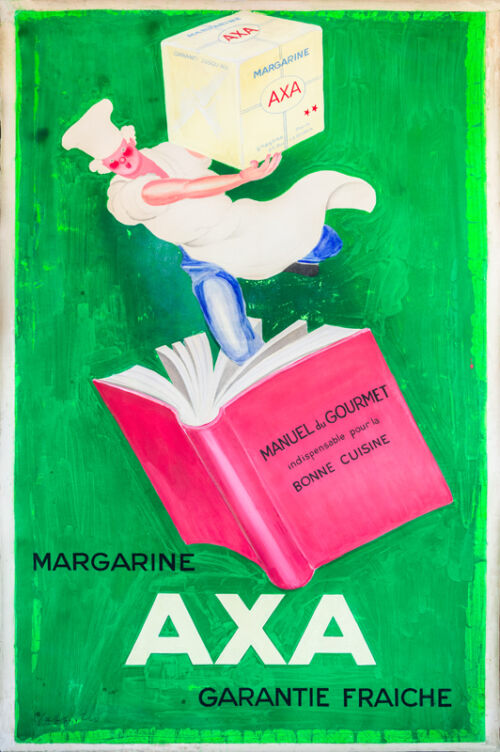 Margarine This model is a variant of Gem Beurre d'Isigny
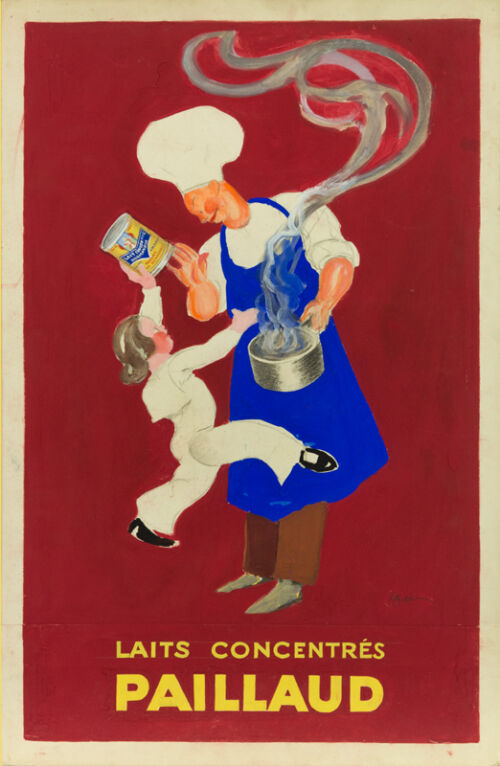 The company known as the Grandes Laiteries de Touraine, de Normandie et du Poitou had 13 factories in 1923. The Paillaud factory in Creully, Calvados, employed nearly 130 workers in 1936 and produced sweetened and unsweetened condensed milk.
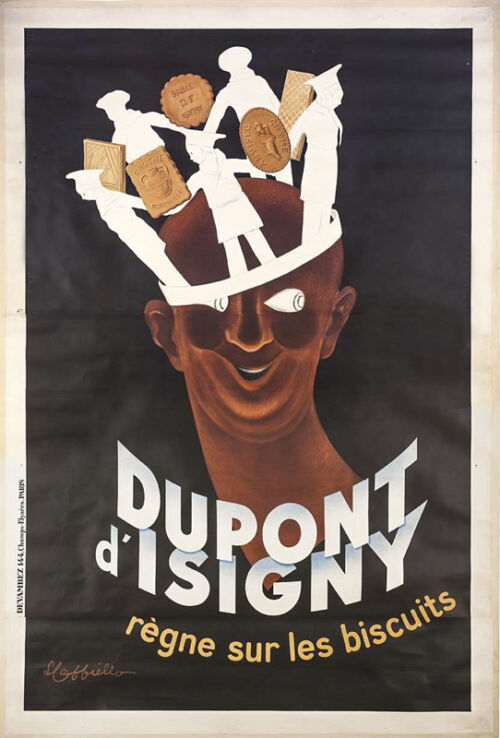 The activity of the Dupont d'Isigny company began with the production and trade of Isigny butter. From 1894 onwards, in La Cambe in the Calvados department, it became a dairy specializing in the production of milk, butter, and cheese. In 1932, the activity diversified with the production of biscuits and the famous caramels.
Today the company has stopped producing biscuits. It is now mainly dedicated to the production of its famous caramels.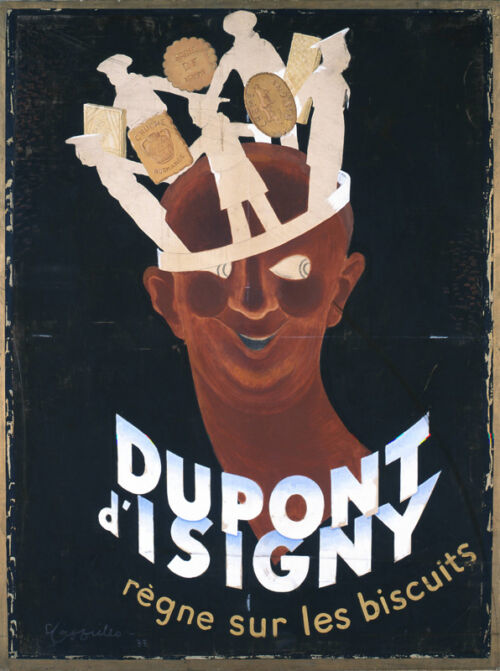 Today, Normandy-based Dupont d'Isigny has given up cookie production. Today, the Dupont d'Isigny company in Normandy is no longer involved in biscuit production, but rather in the production of its famous caramels.
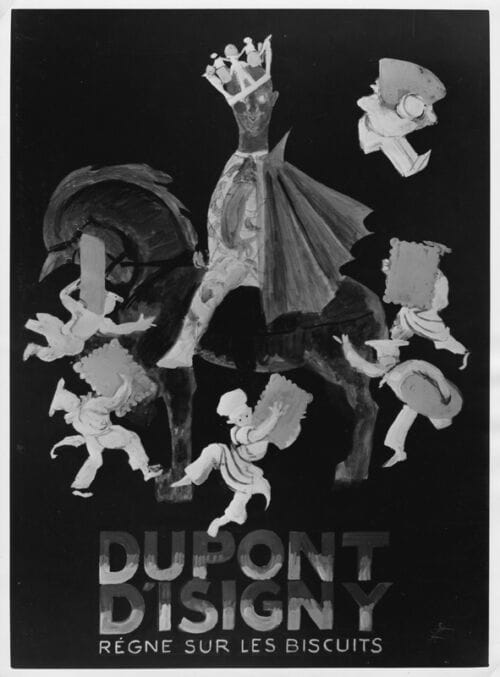 The activity of the Dupont d'Isigny company began with the production and trade of Isigny butter. From 1894 onwards, in La Cambe in the Calvados department, it became a dairy specializing in the production of milk, butter, and cheese. In 1932, the activity diversified with the production of biscuits and the famous caramels. Today the company has stopped producing biscuits. It is now mainly dedicated to the production of its famous caramels.
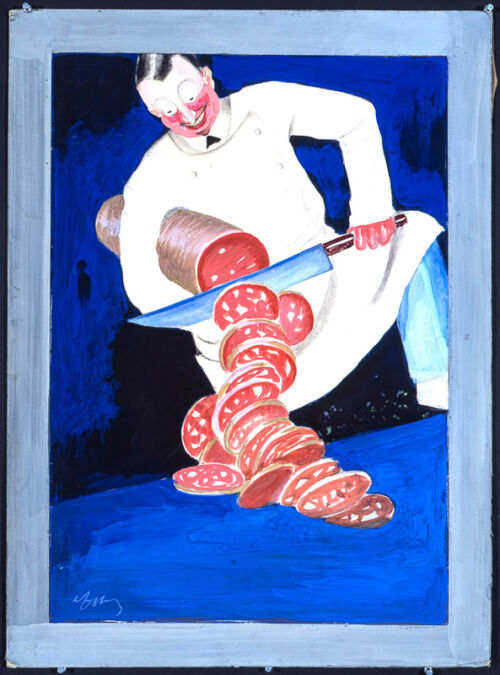 Sausage.
Cappiello created many poster designs around 1933 for Mireille Sausages. This one could be one of them.
Subscribe to our Newletter
© Copyright 2024 Marie-Laure and Pierre Cappiello, rights holders of Leonetto Cappiello
Website: Viny’aqui.
For more information about Cappiello: contact@cappiello.fr